| |
|
|
|
|
|
|
Nebula Picture Gallery |
Interstellar cloud of dust, hydrogen gas and plasma.
It is the first stage of a star's cycle. Originally nebula was a general name for any extended astronomical object, including galaxies beyond the Milky Way (some examples of the older usage survive; for example, the Andromeda Galaxy was referred to as the Andromeda Nebula before galaxies were discovered by Edwin Hubble).
Nebulae often form star-forming regions, such as in the Eagle Nebula. This nebula is depicted in one of NASA's most famous images, the "Pillars of Creation". In these regions the formations of gas, dust and other materials 'clump' together to form larger masses, which attract further matter, and eventually will become big enough to form stars. The remaining materials are then believed to form planets, and other solar system objects.
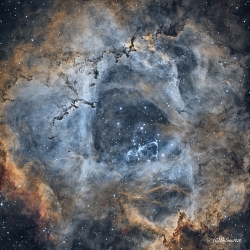
Many nebulae form from the gravitational collapse of diffuse gas in the interstellar medium or ISM. As the material collapses under its own weight, massive stars may form in the centre, and their ultraviolet radiation ionises the surrounding gas, making it visible at optical wavelengths. An example of this type of nebula is the Rosette Nebula or the Pelican Nebula. The size of these nebulae, known as HII regions, varies depending on the size of the original cloud of gas, and the number of stars formed can vary too. As the sites of star formation, the formed stars are sometimes known as a young, loose cluster.
 Some nebulae are formed as the result of supernova explosions, the death throes of massive, short-lived stars. The material thrown off from the supernova explosion is ionised by the supernova remnant. One of the best examples of this is the Crab Nebula, in Taurus. It is the result of a recorded supernova in the year 1054 and at the centre of the nebula is a neutron star, created during the explosion. Some nebulae are formed as the result of supernova explosions, the death throes of massive, short-lived stars. The material thrown off from the supernova explosion is ionised by the supernova remnant. One of the best examples of this is the Crab Nebula, in Taurus. It is the result of a recorded supernova in the year 1054 and at the centre of the nebula is a neutron star, created during the explosion.
Other nebulae may form as planetary nebulae. This is the final stage of a low-mass star's life, like Earth's Sun. Stars with a mass up to 8-10 solar masses evolve into red giants and slowly lose their outer layers during pulsations in their atmospheres. When a star has lost a sufficient amount of material, its temperature increases and the ultraviolet radiation it emits is capable of ionizing the surrounding nebula that it has thrown off.
|
|
| |
|
Aquarius |
NGC7293 - Helix Nebula
YEAR: 2009
|
| |
|
Auriga |
IC410 - NGC1893 - SHO color
YEAR: 2011
|
IC410 - NGC1893
YEAR: 2011
|
IC405 - Flaming Star Nebula
YEAR: 2008
|
| |
|
Canis Major |
NGC2359 - Thor's Helmet (Hb+OIII+Ha)
YEAR: 2025
|
NGC2359 - Thor's Helmet (RGB)
YEAR: 2018
|
NGC2359 - Thor's Helmet (Ha)
YEAR: 2018
|
| |
|
Cassiopeia |
IC1805 - Heart Nebula (alternative procesing)
YEAR: 2025
|
SH2-157 - Lobster Claw Nebula
YEAR: 2025
|
Soul Nebula - IC1848 - SH2-199
YEAR: 2025
|
IC1805 - Heart Nebula
YEAR: 2025
|
NGC281 - Pacman Nebula - FIRST LIGHT ASI533MC
YEAR: 2024
|
NGC281 - Pacman Nebula - SHO false color
YEAR: 2020
|
Hartley2 Comet & NGC281
YEAR: 2010
|
NGC7635 (Bubble Nebula) + M52
YEAR: 2010
|
IC1805 - Heart Nebula (Ha)
YEAR: 2009
|
NGC7635 (Bubble Nebula) + M52 - RGB
YEAR: 2009
|
NGC7635 (Bubble Nebula) + M52 - Ha
YEAR: 2008
|
NGC7635 - Bubble Nebula
YEAR: 2007
|
NGC281 - Pacman Nebula
YEAR: 2007
|
| |
|
Cepheus |
 LDN1121 - LDN1124 - LDN1117 - LDN1112 (IC1396)
YEAR: 2026
|
sh2-171 - The Little Rosette Nebula
YEAR: 2025
|
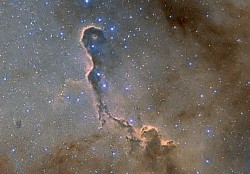
IC1396 - Elephant's Trunk nebula
YEAR: 2025
|
IC1396 - Elephant's Trunk nebula - Ha + RGB
YEAR: 2011
|
SH2-155 - The Cave Nebula
YEAR: 2010
|
NGC7380 - Wizard Nebula Ha Bubble
YEAR: 2010
|
CED214 (NGC7822)
YEAR: 2010
|
IC1396 - Elephant's Trunk nebula (Ha)
YEAR: 2010
|
IC1396 - Elephant's Trunk nebula (Ha)
YEAR: 2009
|
IC1396 - Elephant's Trunk nebula
YEAR: 2008
|
| |
|
Cygnus |
Propeller Nebula (DWB 111/119, Simeis 57)
YEAR: 2026
|
Propeller Nebula - Simeis 57
YEAR: 2025
|
Tulip Nebula, Sharpless 101
YEAR: 2025
|
Veil Nebula - NGC 6992
YEAR: 2025
|
Veil Nebula - NGC 6960
YEAR: 2025
|
NGC6888 - Crescent Nebula
YEAR: 2025
|
IC5070 - Pelican Nebula
YEAR: 2025
|
Veil Nebula - NGC 6960 - FIRST LIGHT ASI533MC
YEAR: 2024
|
Veil Nebula - NGC 6960
YEAR: 2024
|
Veil Nebula - NGC 6992 - Caldwell 33
YEAR: 2024
|
NGC6888 - Crescent Nebula
YEAR: 2013
|
SH2-101 - Tulip Nebula
YEAR: 2011
|
IC5070 - Pelican Nebula Ha
YEAR: 2010
|
IC5146 - Cocoon Nebula (Ha)
YEAR: 2009
|
IC1318 - Butterfly Nebula (Ha)
YEAR: 2009
|
Veil Nebula - NGC 6992 (RGB+Ha)
YEAR: 2009
|
IC5070 - Pelican Nebula Ha
YEAR: 2009
|
NGC7000 - North America Nebula (Ha detail)
YEAR: 2008
|
IC5146 - Cocoon Nebula
YEAR: 2008
|
Veil Nebula - NGC 6992 & 6995
YEAR: 2008
|
NGC6992 - Veil Nebula (East)
YEAR: 2007
|
| |
|
Draco |
NGC6543 - Cat's Eye Nebula
YEAR: 2009
|
| |
|
Lyra |
M57 - NGC6720 - Ring Nebula
YEAR: 2022
|
M56 - NGC6779
YEAR: 2013
|
M57 - NGC6720 - Ring Nebula SHO
YEAR: 2011
|
M57 - NGC6720 - Ring Nebula
YEAR: 2007
|
| |
|
Monoceros |
NGC2237 - Rosetta Nebula
YEAR: 2026
|
NGC2237 - Rosetta Nebula
YEAR: 2024
|
NGC2264 - Cone Nebula
YEAR: 2021
|
NGC2237 - Rosetta Nebula
YEAR: 2021
|
NGC2264 - Cone Nebula
YEAR: 2009
|
NGC2237 - Rosetta Nebula
YEAR: 2009
|
NGC2237 - Rosetta Nebula
YEAR: 2007
|
| |
|
Ophiucus |
IC4604 - Rho Ophiuchus Nebula (v.2)
YEAR: 2009
|
| |
|
Orion |
M78 - NGC2068 - Casper the Friendly Ghost Nebula
YEAR: 2026
|
NGC2024/IC434 - Horse Head and Flame Nebula
YEAR: 2025
|
IC434 - Horse Head Nebula - Ha Narrowband
YEAR: 2021
|
M42 - Orion Nebula (SHO)
YEAR: 2012
|
NGC2024 - Flame Nebula (Ha)
YEAR: 2012
|
IC434 - Horse Head Nebula
YEAR: 2009
|
M42 - NGC1976 - Great Orion Nebula
YEAR: 2007
|
IC434 - Horse Head Nebula
YEAR: 2007
|
M42 - NGC1976 - Orion Nebula (1991)
YEAR: 1991
|
| |
|
Perseus |
NGC1499 - California Nebula Mosaic
YEAR: 2025
|
NGC1499 - California Nebula Mosaic (Ha)
YEAR: 2011
|
NGC1499 - California Nebula Ha Mosaic
YEAR: 2009
|
NGC1499 - California Nebula
YEAR: 2007
|
| |
|
Sagittarius |
M8 - NGC6523 - Lagoon Nebula
YEAR: 2025
|
M8 - NGC6523 - Lagoon Nebula
YEAR: 2025
|
M17 - NGC6618 - Omega Nebula
YEAR: 2024
|
M17 - NGC6618 - Omega Nebula, SHO Color
YEAR: 2020
|
M20 - Trifid Nebula
YEAR: 2013
|
M17 - NGC6618 - Omega Nebula H-alpha
YEAR: 2011
|
M8/M20/M21/NGC6559 - Nebula complex mosaic
YEAR: 2010
|
M17 - NGC6618 - Omega Nebula
YEAR: 2010
|
M17 - NGC6618 - Omega Nebula
YEAR: 2010
|
M20 - Trifid Nebula
YEAR: 2009
|
M8 & M20, Lagoon & Trifid nebula
YEAR: 2008
|
M8 - NGC6523 - Lagoon Nebula (II)
YEAR: 2008
|
M8 - NGC6523 - Lagoon Nebula (I)
YEAR: 2008
|
M8 - NGC6523 - Lagoon Nebula
YEAR: 2007
|
| |
|
Serpens |
M16 - NGC6611 - Eagle Nebula
YEAR: 2025
|
M16 - NGC6611 - Eagle Nebula
YEAR: 2025
|
M16 - NGC6611 - Eagle Nebula
YEAR: 2020
|
M16 - NGC6611 - Eagle Nebula SHO color
YEAR: 2011
|
M16 - NGC6611 - Eagle Nebula Ha
YEAR: 2009
|
| |
|
Taurus |
M1 color SHO
YEAR: 2020
|
M45 - Pleiades Cluster
YEAR: 2009
|
| |
|
Ursa Major |
Owl Nebula (& Surfboard Galaxy)
YEAR: 2026
|
M108 (& Owl Nebula)
YEAR: 2026
|
| |
|
Vulpecula |
M27 - NGC6583 - Dumbbell Nebula
YEAR: 2025
|
M27 - NGC6583 - Dumbbell Nebula (RGB)
YEAR: 2010
|
M27 - NGC6583 - Dumbbell Nebula
YEAR: 2008
|
M27 - NGC6853 - Dumbbell Nebula
YEAR: 2007
|
| |